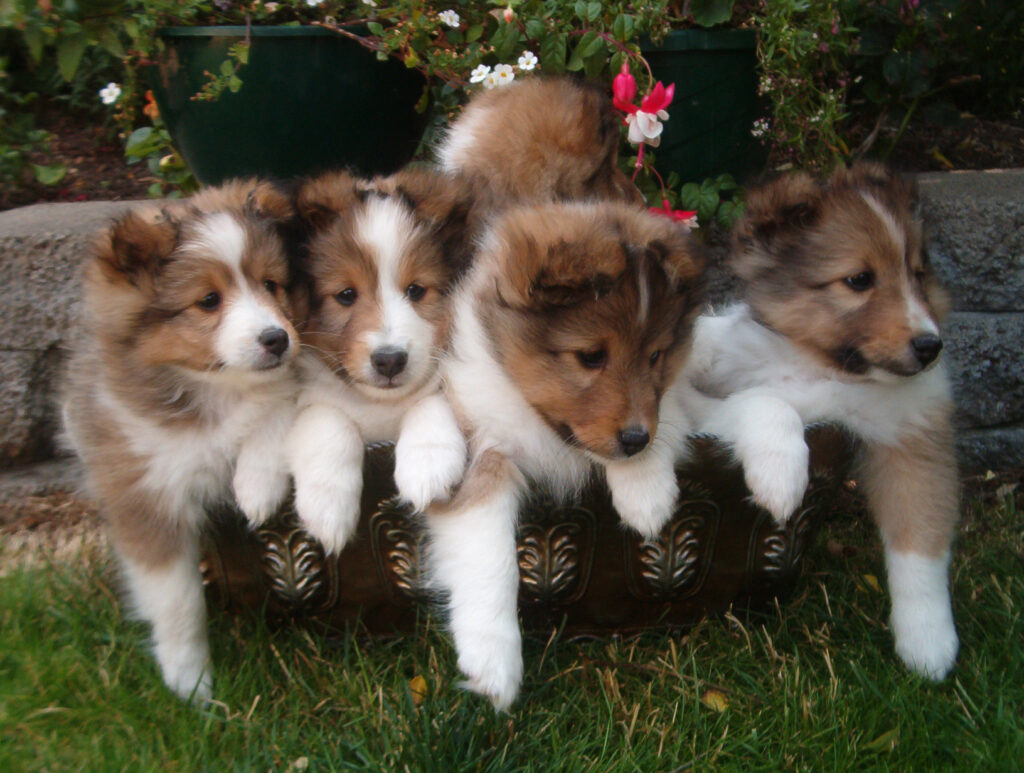
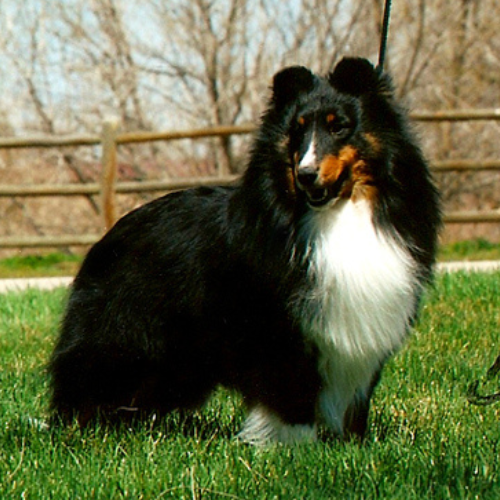
Here at RavenWyn Shelties, we believe in the importance of  testing for genetic diseases.  The keys to a successful breeding program, are to produce healthy, happy, and sound animals.  Below you will find the most common diseases that affect the Shetland Sheepdog, in which we test for and do our best to eliminate from our own breeding program.


     We highly recommend that you familiarize yourself with these diseases when looking for your next furry family member.  It's important to purchase a puppy or dog from a reputable breeder who tests for genetic diseases.  Most of the diseases below DO have genetic tests available.  So, there really isn't an excuse not to test.  Ask the breeder what they are doing to eliminate these defects from their breeding programs.  It will save you a lot of heartache in the long run.


Shetland Sheepdog Disease In Perspective

Canine Thyroiditis (updated 5/23/2008)

Hip Dysplasia   (updated 5/23/2008)

Legg-Calve-Perthes (LCP)

Eye Disorders in Shetland Sheepdogs

von Willebrand's Disease (vWD)

Dermatomyositis (DM)  (updated 5/23/2008)

MDR1 Genotype  (drug lists updated 6/5/2008)


Shetland Sheepdog Disease In Perspective

by Corina Olsen, RavenWyn Shelties

http://www.RavenWyn.com


In 2005, American Kennel Club "AKC " statistics noted 14,278 Shetland Sheepdogs, along with 6,981 Shetland Sheepdog litters were registered.  So, we can approximate that a total of 42,000 Shelties were accounted for by the AKC.  Using this number as a basis, but knowing full well that there are Shelties out there not registered with the AKC, we can theorize how many Shelties are affected and/or are carriers for certain diseases.


DISEASE % Affected / Carriers compiled from Stats. Approx. # of Affected / Carriers based on 42,000 
Autoimmune Thyroiditis 12.7 % Affected 5,334
Hip Dysplasia 4.9 % Affected 2,058
vWD 7% Carriers 2,940
vWD 1% Affected 420
MDR1 Genotype 10% Carrier 4,200
MDR1 Genotype 19% Affected 7,980


After reviewing these numbers "In Perspective", it would be naive for any breeder and/or individual to safely assume that their Shetland Sheepdogs are NOT affected, nor carriers of any of these diseases.  It would even be ignorant to assume that these percentages are too low to concern oneself with even testing for these diseases.  Yes, I know that there is only a 1 percent chance that your Sheltie may have von Willebrand's Disease.  But, when we look at the figures I've provided above, that means there are at least 420 Shelties running around out there that are affected. AT LEAST being the keywords here!


Another way of looking at this information, is to look at our pedigrees. How many of them intertwine?  It's safe to say that today's Shetland Sheepdogs in the United States are in some way related to each other.  Especially when using a popular stud at any given time.  Without beating this issue into the ground, I can end in saying that these genetic defects are out there. It's time to start thinking in perspective and looking at the big picture. Something to think about.


References:

  • Brewer, G.J., & Venta, P.J. Sheltie von Willebrand's Disease: Can Now Be Diagnosed by a DNA Test. Retrieved December 2, 2005 from World Wide Web http://www.vetgen.com/sheltvwd.html

  • Orthopedic Foundation For Animals. Hip Dysplasia and Hip Dysplasia Statistics, Hip Dysplasia by breed. Retrieved December 2, 2005 from World Wide Web: http://www.offa.org/hipinfo.html.

  • Orthopedic Foundation For Animals, Michigan State University Animal Health Diagnostic Laboratory Breed Prevelance Data, MSU Thyroid Statistics. Retrieved December 2, 2005 from World Wide Web: http://www.offa.org/msustats.html

  • The UC Davis School of Veterinary Medicine, Veterinary Genetics Laboratory. Canine Genetics, Affected dogs in breed populations with MDR1-1. Retrieved December 2, 2005 from the World Wide Web: http://www.vgl.ucdavis.edu/research/canine/projects/mdr1b/.

---------------------- Corina Olsen, copyright 2006 ----------------------

Permission to distribute the above article is only allowed in its entirety with note to Author, references, website link, copyright notification, as well as this permission usage stipulation. Thank you for supporting Canine Health Education!


back to top           


Canine Thyroiditis


Autoimmune Thyroiditis is the most common cause of primary hypothyroidism in dogs. The disease has variable onset, but tends to clinically manifest itself at 2 to 5 years of age. Dogs may be clinically normal for years, only to become hypothyroid at a later date. The marker for autoimmune thyroiditis, thyroglobulin autoantibody formation, usually occurs prior to the occurrence of clinical signs. Therefore, periodic retesting is recommended.


How Is Autoimmune Thyroiditis Detected?

Currently the best marker for Autoimmune Thyroiditis is a positive Thyroglobulin Autoantibody (TgAA) test. Thyroglobulin is a very large protein within the thyroid glands and the thyroid hormones are incorporated in its structure. This protein marker is present when there is active thyroid disease. Although the mode of inheritance is unknown, right now it would be safer to assume a single gene disorder and recessive trait, much like we saw with prcd-PRA. Hence TgAA will be positive in dogs having both genes for Thyroiditis and it will not be positive in carriers who have only one gene for the trait.


Michigan State University Thyroid Statistics

(no apparent changes for 2005 - 2007)


Stats performed through Sheltie Rank # # of Evaluations % Autoimmune Thyroiditis % Equivocal*
2007 24 14,110 12.7 5.8
2005 24 14,110 12.7 5.8
2004 23 13,003 13.7 6.3


OFA Thyroid Statistics for Shetland Sheepdogs


Evaluations Generated From Jan. 1974 through: Sheltie Rank # # of Evaluations % Normal % Autoimmune Thyroiditis % Idiopathic Hypothyroidism % Equivocal*
2007 4 536 74.4 13.6 0.2 11.8
2006 3 452 74.8 13.1 0.2 11.9

* Equivocal is interpreted as "undecided".


References:

  • Orthopedic Foundation For Animals, Michigan State University Animal Health Diagnostic Laboratory Breed Prevelance Data, MSU Thyroid Statistics. Retrieved December 2, 2005 and May23, 2008 from World Wide Web: http://www.offa.org/msustats.html

  • Orthopedic Foundation For Animals. General Thyroid Information. Retreived December 2, 2005 and May 23, 2008 from World Wide Web: http://www.offa.org/thygeninfo.html


back to top


Hip Dysplasia


Hip Dysplasia is a terrible genetic disease because of the various degrees of Arthritis (also called Degenerative Joint Disease, Arthrosis, Osteoarthrosis) it can eventually produce, leading to pain and debilitation.


The very first step in the development of Arthritis is Articular Cartilage (the type of cartilage lining the joint) damage due to the inherited bad biomechanics of an abnormally developed hip joint. Traumatic Articular fracture through the joint surface is another way cartilage is damaged. With cartilage damage, lots of degradative enzymes are released into the joint. These enzymes degrade and decrease the synthesis of important constituent molecules that form hyaline cartilage called Proteoglycans. This causes the cartilage to lose its thickness and elasticity, which are important in absorbing mechanical loads placed across the joint during movement. Eventually, more debris and enzymes spill into the joint fluid and destroy molecules called Glycosaminoglycan and Hyaluronate which are important precursors that form the cartilage Proteoglycans. The joint's lubrication and ability to block inflammatory cells are lost and the debris-tainted joint fluid loses its ability to properly nourish the cartilage through impairment of nutrient-waste exchange across the joint cartilage cells. The damage then spreads to the Synovial Membrane lining the joint capsule and more degradative enzymes and inflammatory cells stream into the joint. Full thickness loss of cartilage allows the synovial fluid to contact nerve endings in the subchondral bone, resulting in pain. In an attempt to stabilize the joint to decrease the pain, the animal's body produces new bone at the edges of the joint surface, joint capsule, ligament and muscle attachments (bone spurs). The joint capsule also eventually thickens and the joint's range of motion decreases.


No one can predict when or even if a Dysplastic dog will start showing clinical signs of lameness due to pain. There are multiple environmental factors such as caloric intake, level of exercise, and weather that can affect the severity of clinical signs and phenotypic expression (radiographic changes). There is no rhyme or reason to the severity of radiographic changes correlated with the clinical findings. There are a number of Dysplastic dogs with severe arthritis that run, jump, and play as if nothing is wrong and some dogs with barely any arthritic radiographic changes that are severely lame.


OFA Hip Dysplasia Statistics for Shetland Sheepdogs


Evaluations Generated From Jan. 1974 through: Sheltie Rank # # of Evaluations % Rated Excellent % Rated Dysplastic
Dec. 2007 129 16,223 26.8 4.8
Dec. 2006 128 15,396 26.9 4.8
Dec. 2005 123 14,494 27.1 4.9
based on these percentages, we can calculate that approx. 68% of the Shetland Sheepdogs evaluated, fell somewhere between with Good and Fair Ratings.


OFA Trends in Hip Dysplasia for Shetland Sheepdogs

(Shetland Sheepdogs listed by birth year: 1980 - 2004)


Rating
Total Dogs
Born
to 1980
Born
1990-92
Born
2000-02
Born
03-04
Change
1980 to
03-04

Excellent

26.0% 26.0% 25.1% 24.0% - 7.7%
Dysplastic 5.6% 3.6% 3.6% 2.5% - 55.4%
Total Dogs 515 2,542 2,677 1,452  


For more information on Hip Dysplasia, please visit the Orthopedic Foundation for Animals at www.offa.org.

References:

  • Orthopedic Foundation For Animals. Hip Dysplasia and Hip Dysplasia Statistics, Hip Dysplasia by breed, Trends in Hip Dysplasia (selected breeds). Retrieved December 2, 2005 and December 5, 2006 and May 23, 2008 from World Wide Web: http://www.offa.org/hipinfo.html.


back to top


Legg-Calve-Perthes Disease (LCP)


Legg-Calve-Perthes Disease (LCP) is a disorder of hip joint conformation occurring in both humans and dogs. In dogs, it is most often seen in the miniature and toy breeds between the ages of 4 months to a year.


LCP results when the blood supply to the femoral head is interrupted resulting in avascular necrosis, or the death of the bone cells. Followed by a period of revascularization, the femoral head is subject to remodeling and/or collapse creating an irregular fit in the acetabulum, or socket. This process of bone cells dying and fracturing followed by new bone growth and remodeling of the femoral head and neck, can lead to stiffness and pain.


LCP is believed to be an inherited disease, although the mode of inheritance is not known. Because there is a genetic component, it is recommended that dogs affected with LCP not be used in breeding programs.


The degree of clinical severity of LCP varies, and treatment can vary accordingly.

In mild cases, the dog may occasionally resist bearing weight on the affected leg or may exhibit periodic lameness. In these cases, limited activity and treatment with non-steroidal anti-inflammatory drugs (NSAIDs) may be sufficient.


In more severe cases as the pain and discomfort experienced increase, the dog may become totally lame and avoid all use of the affected leg. Furthermore, the leg muscles may begin to atrophy after extended periods of non-use. In severe cases, treatment often resorts to excision of the femoral head and neck. By removing the femoral head and neck, the bone on bone contact that is the source of the pain and discomfort is eliminated. Later, through the healing process and with therapy, a new false joint is formed by muscle and tissue, and the dog may have a complete recovery.


LCP Fast Facts:

  • Shetland Sheepdogs are one of the 25 breeds at risk for LCP.

  • Phenotypically normal dogs are assigned an OFA Legg-Calve-Perthes #

  • Dogs with evidence of LCP are not assigned a number.

For more information on Legg-Calve-Perthes Disease, please visit the Orthopedic Foundation for Animals at www.offa.org.

References:


back to top


Eye Disorders in Shetland Sheepdogs


Progressive Retinal Atrophy (PRA) is a genetic disease of the Retina. This tissue, located inside the back of the eye, contains specialized cells called Photoreceptors that absorb the light focused on them by the eye's lens, and converts that light, through a series of chemical reactions into electrical nerve signals. The nerve signals from the retina are passed by the Optic Nerve to the brain where they are perceived as vision. The Retinal Photoreceptors are specialized into Rods, for vision in dim light (night vision), and Cones for vision in bright light (day and color vision). PRA usually affects the Rods initially, and then Cones in later stages of the disease.


Collie Eye Anomaly (CEA) is a defect in formation of the eye. Several aspects of the disease are recognized, but the crucial lesion (observed defect) is a pale patch seen ophthalmoscopically at the back of the eye. This lesion is called Choroidal Hypoplasia (CH), and is a local defect in formation of the blood vessels and adjacent tissues underlying the Retina. All dogs affected by CEA have Choroidal Hypoplasia, by definition. More severely affected dogs may have pits (colobomas) affecting the Retina and adjacent tissues. In the most severely affected eyes retinal detachments and hemorrhages may occur, producing blindness.
 
Corneal Dystrophy (CD) is a hereditary eye disease affecting only the Cornea.  The impact of this disorder comes in varying degrees and the age of onset can vary with type.  It is only through selective breeding that this disorder can be reduced in the the Shetland Sheepdog population.

References:


back to top


von Willebrand's Disease (vWD) in Shetland Sheepdogs


Von Willebrand's disease vWD, an inherited bleeding disorder, usually comes in two major types, type I and type III. (There is also a rarer Type II, not relevant to Shelties).

  • Type III is a severe bleeding disorder with a high risk of spontaneous bleeding as well as a risk of serious bleeding from trauma and surgery. The Shetland Sheepdog has type III vWD, the severe type..

  • Type I is milder, with most of the risk coming from trauma or surgery. It is possible that there may also be a mutation for type I vWD in Shetland Sheepdogs.  If it is present in Shetland Sheepdogs, this type of vWD is a mild type, and poses much less risk for bleeding.  We won't know for a little time whether or not type I is present in Shetland Sheepdogs.

Questions have been raised from time-to-time as to whether vWD is a health problem in the Shetland Sheepdog breed. We can say with scientific certainty that type III is a significant problem in Shetland Sheepdogs. The mutation we have discovered has been found to be the causative mutation in several Shetland Sheepdogs severely affected with bleeding from vWD.  Further, VetGen has now done enough testing on Shetland Sheepdogs to have a reasonably good estimate of the frequency of carriers. A little over 11% of Shetland Sheepdogs are carriers of the type III vWD mutation. This is a significant health burden in Shetland Sheepdogs and it would be good to get rid of this disease gene by using the DNA test.


Disease Gene Frequency in Shetland Sheepdogs Tested:

results as of January 26, 2005


vWD Type III Clear Carrier Affected
Shetland Sheepdog 92 % 7 % 1 %
IN PERSPECTIVE: The carrier frequency in this breed is about 10%, and suggests that this is still considered a high percentage.  Therefore, precautions should be taken by conducting genetic testing for this deadly disease.


References:

  • Brewer, G.J., & Venta, P.J. Sheltie von Willebrand's Disease: Can Now Be Diagnosed by a DNA Test. Retrieved December 2, 2005 and May 23, 2008 from World Wide Web http://www.vetgen.com/sheltvwd.html


back to top


Dermatomyositis (DM)


Excerpts from March 2002 ASSA (American Shetland Sheepdog Assoc.)

National Symposium on Dermatomyositis

by Dr. Christine Rees, Texas A & M University


Commonly asked questions about Dermatomyositis (DM) in dogs:


1.   What is Dermatomyositis?

Dermatomyositis (DM) is a devastating inherited inflammatory disease of the skin and/or muscle, which most commonly afflicts Collies, Shetland Sheepdogs and their crosses.  The skin lesions consist of hair loss with or without skin redness, scaling and crusting of the face, ears, legs and tail tip.  One or more of these areas of the body may be affected.  In addition, some dogs may have muscular involvement.  Sometime this muscle involvement is so pronounced that it results in muscle atrophy.  Other cases may suffer from megaesophagus (enlarged food tube in the body) with the end result of aspiration pneumonia.  In milder cases the dogs may appear to be sloppy eaters, or have a strange high stepping gait.  Shetland Sheepdogs are fortunate because muscle involvement does not seem to be as common as with the Collie.  Most commonly dogs develop the skin lesions within the first few years of life but dogs as old as 8 years old have been reported to develop this problem.  It is thought that certain triggering factors such as stress may cause a dog to express the DM.  These triggering factors are thought to include such circumstances as a bad viral infection (i.e. parvo) and hormonal fluctuations (heat cycles).  In some cases no triggering factor has been identified.  Since this is a genetic problem, affected dogs should be spayed or neutered.  This will also help the dogs respond better to treatment.


DM is not an itchy problem unless a secondary infection is present.  So if your pet is itchy and it does not look like a secondary infection is present (bacteria or yeast) then your pet’s problem is probably not DM.  The only exception would be if you had a dog with DM and an underlying allergy.  This can occur but is not common.


NOTE:  Some people use the abbreviation DM to stand for diabetes mellitus (a type of diabetes) or demodex (a type of mite found on skin scraping).  When we use this abbreviation we are using it to represent the skin disease Dermatomyositis.


2.   How is DM diagnosed? 

DM is diagnosed by taking the dog to a veterinarian and having a physical examination and a skin and muscle biopsy taken.


3.   How is DM treated in dogs? 

Several different treatment options are available and one of these treatments is usually used at a time.  Steroids, other Medications, or Antioxidants (common being Vitamin E).


4.   How long will my DM dog need to be treated?

This is a gray area.  We do not know for sure.  Some dogs need 3 to 6 months of treatment and do fine whereas other dogs need life long therapy.  The length of treatment varies according to the individual dog and the severity of the disease.


5.   How is DM genetically expressed or passed on?

      We do not know but we have seen this problem in certain breeding lines so we know that it is an inherited problem.  The exact mode of inheritance is not known.  This is the reason for the genetics study that we are performing at Texas A&M College of Veterinary Medicine.


     To view the symposium notes in their entirety, please click here.


     For even more information on DM, please visit the Texas A&M DM Studies Website:

     http://www.shalaine.com/dm/dm.html


back to top


MDR1 Genotype


A pharmacologist at the WSU College of Veterinary Medicine has discovered a mutant gene for a key transport protein in the susceptible collies. The gene codes for P-glycoprotein, a large protein complex that acts to pump medications out of the brain and back to the bloodstream where they can be metabolized safely. In the collies that lacked the complete gene for P-glycoprotein, they do not produce the complete protein and cannot pump out the medications. The drugs then build within the brain to toxic levels. P-glycoprotein also helps transport other drugs out of the brain and other tissues in humans and animals, including popular over-the-counter medications.


Shetland Sheepdogs are one of the Affected Breeds!  Continue Reading!


Approximately 3 of every 4 Collies in the United States have the mutant mdr1 gene. Initial studies have shown that the frequency is about the same in France and Australia, so, it is likely that most Collies worldwide have the mutation. The mutation is present in other herding breeds, but at a lower frequency than in Collies.


The only way to know if an individual dog has the mutant mdr1 gene is to have the dog tested. As more dogs are tested, more breeds will probably be added to the list of affected breeds.


Collie bloodlines turn up surprising relatives from MSNBC News. Aug 3, 2004


Problem Drugs
There are many different types of drugs that have been reported to cause problems in Collies, ranging from over-the-counter anti-diarrheal agents like Imodium® to antiparasitic and chemotherapy agents. It is likely this list will grow to include more drugs as research progresses.

Drugs that have been documented to cause toxicity in dogs with the MDR1 mutation:


DRUG

BRANDS

TYPE / CLASSIFICATION

TREATMENT

ABAMECTIN / IVERMECTIN / SELAMECTIN/ MILBEMYCIN / MOXIDECTIN

ANTIPARASITIC AGENT

Used in HEARTWORM , EAR MITE MEDICATIONS,  YARD PESTICIDES

ACEPROMAZINE

 TRANQUILIZER 

Commonly Prescribed for Calming Down Dogs for the 4th of July, among other uses!

LOPERAMIDE

Imodium®

ANTIDIARRHEAL AGENT

DOXORUBICIN ANTI-CANCER AGENT
VINCRISTINE ANTI-CANCER AGENT
VINBLASTINE ANTI-CANCER AGENT

BUTORPHANOL

Stadol, Stadol NS

Anesthesia; Sedation; Pain Control


Potential Problem Drugs
The following drugs may potentially cause problems when given to dogs that have the mutation. No data is currently available. It is suggested that caution be used when administering these drugs to dogs with the MDR1 mutation.  More drugs have been shown to be pumped by the protein encoded by the MDR1 gene, but data is not currently available on how they may affect dogs with the MDR1 mutation.


DRUG

BRANDS

TYPE / CLASSIFICATION

TREATMENT

ONDANSETRON

Zofran

Treatment for Nausea & Vomiting.

DOMPERIDONE  Treatment for Nausea & Vomiting.
PACLITAXEL ANTI-CANCER AGENT
MITOXANTRONE ANTI-CANCER AGENT

ETOPOSIDE

VePesid, VP-16

Used in combination w/ other treatments for Radiation Therapy; surgery, small cell lung Carcinoma, some Leukemias
RIFAMPICIN  Used to treat certain Bacterial infections. Used with other medicines to treat Tuberculosis (TB), and to treat those carrying Meningitis bacteria in their throat & nose.


Please be aware that this is a still considered a NEW test and many breeders are not testing for it quite yet.  In no way, does this mean that they are not reputable or responsible.  This is just an extra precaution we take here at RavenWyn Shelties, in order to maintain our own integrity and philosophy.


Disease Gene Frequency in Shetland Sheepdogs Tested:


MDR1 # Tested Super Sensitive Sensitive Normal / Non-Carrier
Shetland Sheepdog 214 2 % 17 % 80 %
The carrier frequency in this breed is about 10%, but suggests that this is still considered a high percentage.  Therefore, precautions should be taken by conducting genetic testing for this deadly disease.


For more information and / or to test your dog for the MDR1 Gene,

please visit the Washington State University VCPL Website,  or the

UC Davis VGL website


Also worth reading, is : Breed distribution and history of canine mdr1-1, a pharmacogenetic mutation that marks the emergence of breeds from the collie lineage.

You can download this article for free at Proc Natl Acad Sci U S A. 2004.


References:

  • Deglin, J.H., Vallerand, A.H. (2003) Davis's Drug Guide for Nurses, Eighth Edition. 

  • MedicineNet.com.Generic Name: Domperidone-Oral. Retrieved September 19, 2006 from World Wide Web: http://www.medicinenet.com/domperidone-oral/article.htm

  • Medline Plus, Drug information.  Rifampin (Systemic). Retrieved September 19, 2006 from World Wide Web: http://www.nlm.nih.gov/medlineplus/druginfo/uspdi/202511.html

  • The UC Davis School of Veterinary Medicine, Veterinary Genetics Laboratory. Canine Genetics, Affected dogs in breed populations with MDR1-1. Retrieved December 2, 2005 and May 23, 2008 from the World Wide Web: http://www.vgl.ucdavis.edu/cghg/mdr1.php.

  • Washington State University, Veterinary Clinical Pharmacology Laboratory (VCPL). Multidrug Sensitivity (e.g. Ivermectin). Retrieved December 2, 2005 and September 15, 2006 from the World Wide Web: http://www.vetmed.wsu.edu/depts-VCPL/index.asp.  Problem Drugs. Retrieved May 23, 2008 from the World Wide Web: http://www.vetmed.wsu.edu/depts-VCPL/drugs.aspx.


back to top


Home | Sheltie Puppies | Available Shelties | Sheltie Health Disorders | Link to us


copyright 2007, ModPosh :: Breeder Web Design